The Complete Guide for Ordering Chinese Tea at a Dim Sum Place in Hong Kong
The waitress swings by with a stack of menus and asks 飲咩茶呀 (yam2 me1 caa4 aa3, "what tea would you like?"). You say pu-erh. You always say pu-erh, not because you chose it but because that's the only Chinese tea you know exists.
Ordering tea is the first move in 飲茶 (yam2 caa4), literally "drink tea," the Cantonese term for the whole ritual of going out for dim sum. In Hong Kong, tea isn't a side order, it's the thing the meal is technically named after. Beside the choice of tea, there are a handful of small things you won't find written down anywhere official. With this guide, you'll learn all the unwritten rules that everyday Hongkongers practice without thinking.
Beyond pu-erh: the Chinese teas on a Hong Kong dim sum menu
Pu-erh is the reflex order, and it's a good one, the safe, mildest-tasting default that works with almost anything. But there's a wider range of Chinese tea on a standard Hong Kong dim sum list than most first-timers realize. Here's what's actually there, ordered from lightest to strongest, and what you're likely to pay for it.
| Tea | What it's like | Standard or premium | When to pick it |
|---|---|---|---|
| 香片 Jasmine | Light, floral, green tea scented with jasmine blossom | Standard | When the meal leans toward seafood or steamed dishes and you want something that won't compete |
| 壽眉 Shou Mei | A white tea, light and slightly sweet | Standard | The lightest option, good across a big spread of dishes |
| 鐵觀音 Tie Guan Yin | Floral oolong, rounder and slightly toastier than jasmine | Standard, occasionally a small premium | More body than jasmine, still easy to drink |
| 水仙 Shui Xian | An oolong with more mineral depth | Often a pricier option | Worth trying once, but check the price first |
| 菊普 Chrysanthemum pu-erh | Pu-erh's earthiness with a lighter, sweet chrysanthemum note | Standard, a named menu item in its own right | When you want pu-erh but softer |
| 普洱 Pu-erh | Earthy, dark, a little smoky | Standard | The default, and a good one, especially with fried or fattier dishes |
These six cover what actually shows up at a Hong Kong dim sum table, so you won't need to look further than this list on a typical visit. If you do spot something unfamiliar on the menu, aged pu-erh especially, treat it as a signal to check the price first. That's usually where the real cost jumps come from, not from anything on the standard list above.
- 唔要普洱, 仲有咩選擇? (m4 jiu3 pou2 nei2, zung6 jau5 me1 syun2 zaak6?, "Not pu-erh, what else is available?")
- 邊個唔洗加錢? (bin1 go3 m4 sai2 gaa1 cin2?, "Which one doesn't cost extra?")
- 冇所謂啦。 (mou5 so2 wai6 laa1., "Whichever one is fine.")
- 等齊人先叫。 (dang2 cai4 jan4 sin1 giu3., "Will order when everyone arrives.")
You don't need to feel shy asking. The waitress gets asked about tea all the time. Just be prepared for a fairly monotone response, this is Hong Kong, after all, where good service is a plus but not standard.
What the 茶位 tea fee actually covers
Whichever tea you picked, you'll notice a 茶位 (caa4 wai2, "tea seat") line on the bill. Even if you choose not to drink any tea at all, the fee will still stand. It's a standard, near-universal per-person charge in Hong Kong, typically landing somewhere in the HKD 8 to 15 range, and it covers the tea itself plus the pot and utensils for your seat at the table. Every table pays it, locals included.
The 茶位 fee covers the standard house tea you order. However, if you pick something more specialty, or an aged version of the house tea, the fee could go up considerably. You should check the menu first before ordering some tea you heard about from a food guide last week.
How much tea to order for your table
Once you've picked a tea, the next question is how much of it to order. Start with the ratio locals actually use: one pot per two people. A table of four orders two pots, a table of six orders three, and it's rare to see a table go beyond three pots, even for a party of ten or more people.
There are two reasons for this. First, not everyone at the table wants the same tea, so multiple pots let you split between, say, pu-erh and jasmine without anyone settling for a tea they didn't pick. Second, staff can keep up with refills more easily when there's more than one pot on the table. One pot for ten people means everyone's stuck waiting on the same trolley pass, while spreading the same amount of tea across a few pots means each one gets topped up sooner, and nobody's cup runs dry for long.
So why not order more than three? No one says you can't, but in Hong Kong, real estate is precious everywhere, even on a dim sum table. With too many teapots crowding the space, there's just no room left for the food.
How to signal for a refill
Waving down a waitress works, but it's not how it's actually done. Most dim sum places are understaffed nowadays, you could have your hand up for five minutes without anyone noticing. The move instead is to lift the teapot lid and rest it on top or off to the side of the pot, a silent signal you'll find across Chinese tea culture generally, not just in Hong Kong. As Hong Kong Traveller's yum cha etiquette guide puts it, propping the lid ajar is a near-universal cue that tells staff you need a refill without a word said.
It works because staff do refill runs occasionally, scanning table to table for a propped-up lid rather than waiting to be flagged down. The trick is to lift it while there's still a cup or two left in the pot, that way, even if staff don't reach you right away, you've got the buffer of another pour or two before you actually run dry.
You can adjust as you go
One more thing worth knowing: you're not stuck with your first choice. Most places will happily swap you to a different blend halfway through, or bring a second pot alongside the first. No need to commit to one tea for the whole sitting the way you might feel locked into one dish.
The same freedom applies to strength, not just choice. Depending on the quality of the tea leaves and how often the pot gets refilled, tea can end up going either too strong or too weak as the meal goes on. Neither is something you have to just live with.
If it's gone too strong for your liking, ask for a pot of hot water and dilute it yourself, or ask staff for a fresh batch of leaves. If it's gone too weak after too many refills, the fix is the same, ask for new tea leaves. There's usually no extra charge for either.
Order with the system, not against it
These conventions, the tea fee, the lid signal, the one-pot-per-two-people ratio, are specifically Hong Kong's version of a much older Chinese tea custom. Cross the border into mainland Guangzhou, where dim sum's Cantonese tea house tradition began, and you'll find a similar rhythm at the table, but the tea fee and portioning habits shift slightly from city to city. Hong Kong's version is its own dialect of the wider practice, shaped by decades of dense, fast-turnover teahouses.
Next time the question comes, 飲咩茶呀 (yam2 me1 caa4 aa3), you've got an answer instead of a reflex. Order what you actually want, know why it costs what it costs, and let the rest of the system work in the background the way it does for everyone else at the table.
If that's got you curious to explore beyond the standard pot, you can bring a piece of that same ritual home.
Bring the tea ritual home
You don't need a dim sum table to enjoy Chinese tea properly. Our Chinese-style teaware is built for the same slow, hands-on ritual, glass teapots that let you watch the leaves unfurl and the color deepen with every steep, plus cups and trays that make pouring for others feel as good as it does at the table.
Browse The Full Catalog
Elevate your tea ritual with the Oriental Blossom Tea Set, a luxurious collection that brings a touch of timeless sophistication to any table. Crafted from the finest bone china, this exquisite set of four cups and saucers is a true work of art, inspired by the beauty of oriental design. The vibrant blue and gold detailing, paired with delicate floral motifs, transforms the ordinary tea moment into a lavish experience. Tea Set Includes 4 Tea Cups and 4 Saucers

Add a touch of charm to your table with the Oriental Blossom Salad Plates, now in a soft, blushing pink. These plates are made from fine bone china and perfect for serving your main courses in style. With delicate floral designs and elegant gold accents, they bring effortless beauty and a hint of luxury to every meal.
Pair them with the matching Oriental Blossom Tea Set and Oriental Blossom Salad Plate to create a cohesive and exquisite table setting that will leave a lasting impression.
Size: 27 cm
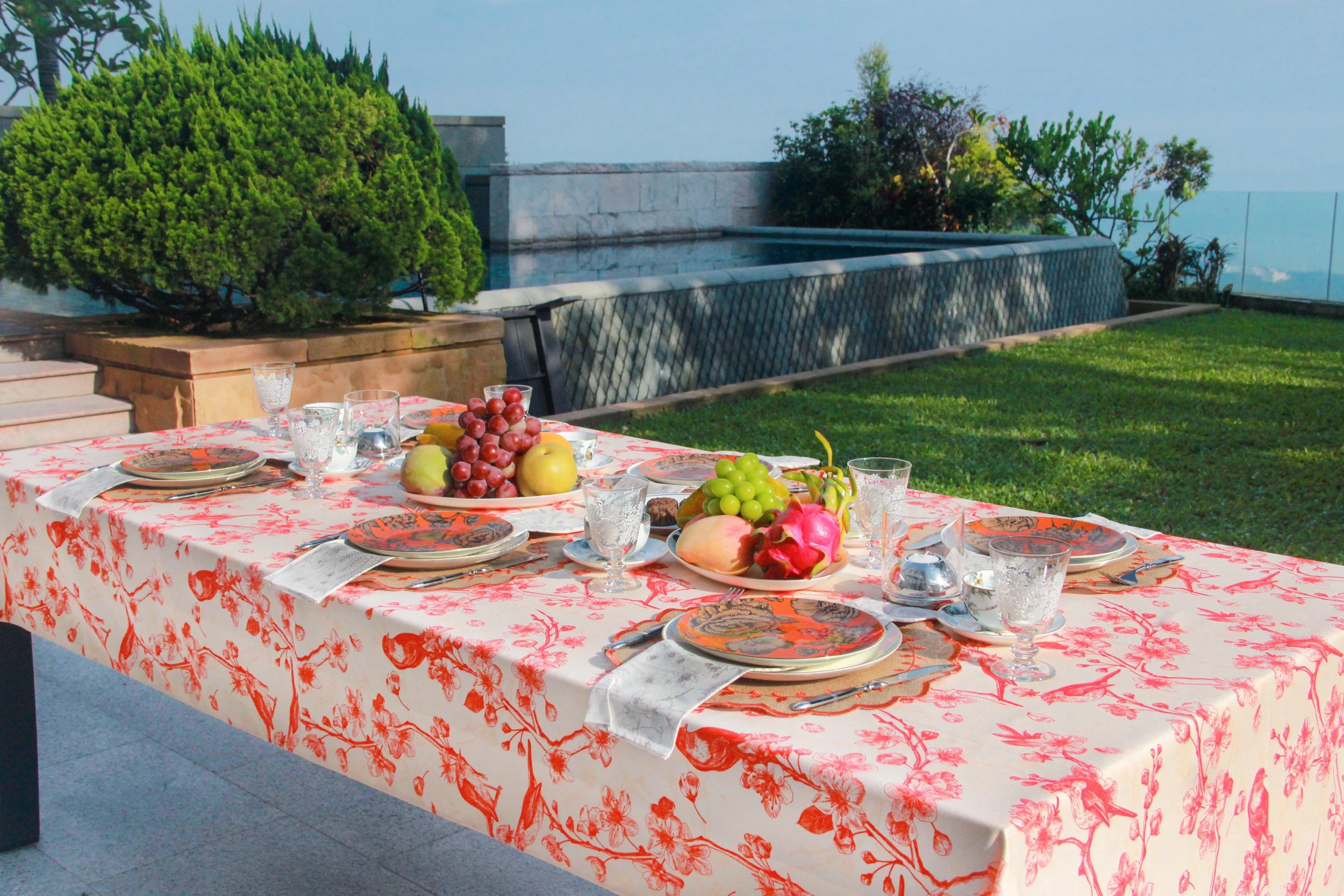
Bring the beauty of the outdoors into your home with the charming Garden Birds Tablecloth, featuring a delightful blend of vibrant red, orange, and beige tones. The elegant garden-themed design showcases birds perched on blossoming branches, adding a refined touch of nature to your dining space. Perfect for both casual meals and special gatherings, this tablecloth creates a stunning backdrop for any occasion, effortlessly elevating your table setting.
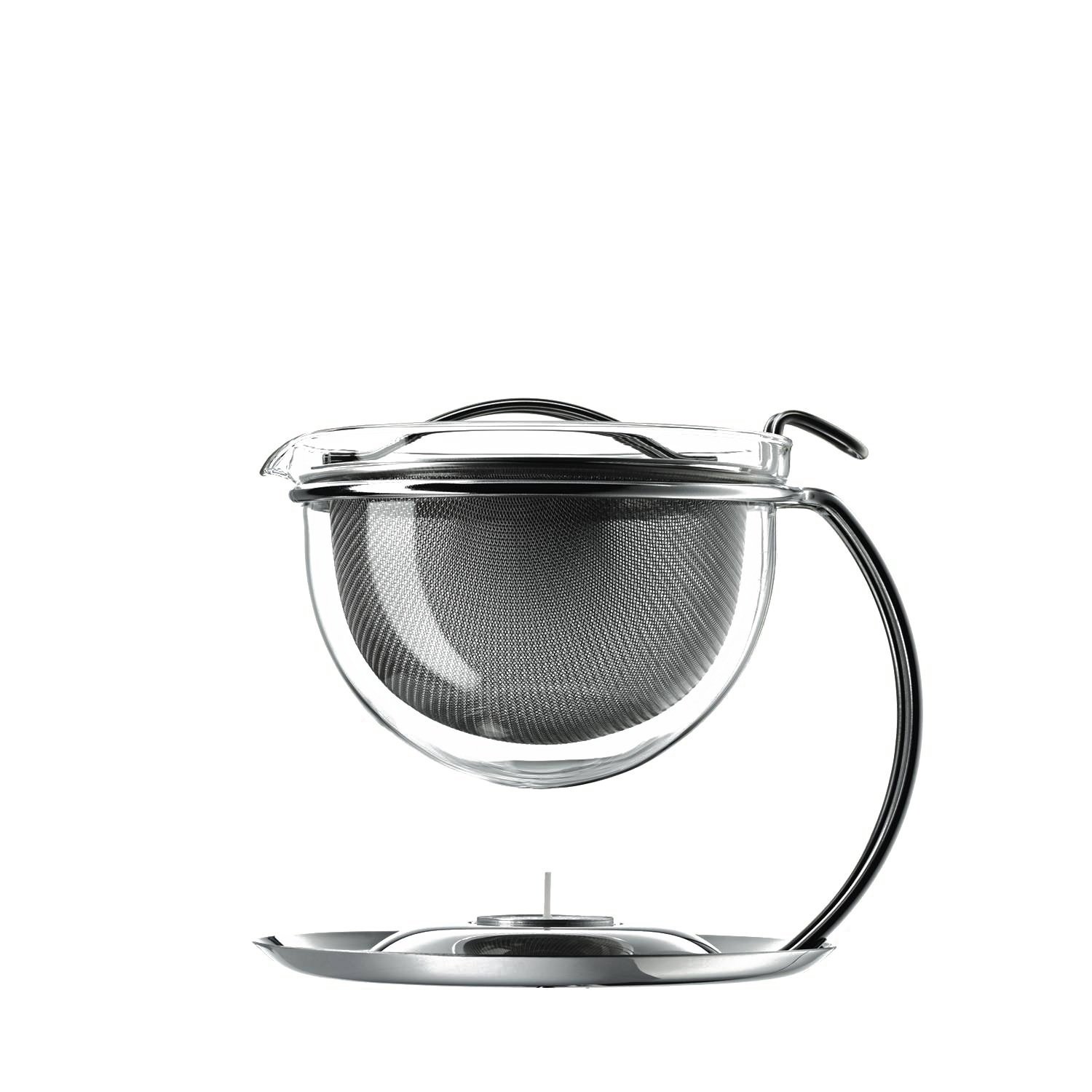

The Mono Filio Teapot, masterfully designed by Tassilo von Grolman, is a harmonious blend of modern design and impeccable functionality. Since its debut, this iconic teapot has graced tea tables and art collections globally, admired for its sleek aesthetics and unparalleled brewing capabilities.