Hong Kong Tea Culture Explained: Who Drinks What, When and Why
In Hong Kong, tea is rarely just about thirst. Consumed at different times, in different venues, for different reasons, a cup of tea shows you how the city's culture moves.
The city kept its Chinese roots, absorbed a British tradition brought by colonists, and then blended the two into something entirely its own: the cha chaan teng, where milk tea and pineapple buns draw visitors from around the world.
Here's the difference, cup by cup.
The Chinese Teahouse: Yum Cha and the Social Contract of Tea
飲茶 (yum cha) translates as “drink tea.” It is the morning ritual for many locals, and it serves more than just eating and drinking, extending well into the social scene.
The teahouse, at its core, is a third place. Not home, not work. It is where social life happens for a generation of Hongkongers who live in flats too small to host anyone, in a city that does not have a town square. What it has instead is a round table and a pot of pu-erh, and depending on the day, a completely different kind of social interaction takes place around it.
The weekday crowd. Walk into a traditional teahouse on a Tuesday morning and the average age in the room is somewhere north of 65. Retired men and housewives who have been holding this particular table at this particular hour for years. A pot of pu-erh. Two or three dim sum baskets. A phone screen open where the newspaper used to be, the posture unchanged. This sitting can last three or four hours without anyone raising an eyebrow.
The teahouse is where information moves. Where a retired civil servant hears which neighbour's son just got promoted, which building's management company is changing, who is sick, who is recovering. A gossip centre in the original sense: not malicious, but essential. In a city where the pace is relentless and the flats are small, this is where the slow, sustaining work of knowing your community actually happens.
What keeps people coming back is not just habit. It is the specific comfort of being known without needing to explain yourself: the waiter who refills your pot before you ask, the neighbour two tables over who nods instead of greeting. None of it needs to be said out loud.
The weekend crowd. The same restaurant on Saturday morning. The average age drops twenty years, and the noise level doubles, filled with families chatting and families arguing, but at the end of it, it is still family.
Weekend yum cha fills the function that Sunday lunch at a parent's house would fill elsewhere. Hong Kong homes are small. A three-generation family meal in a flat the size of a European living room is not realistic for most people. So the teahouse does the hosting. Adult children bring their own children to meet the grandparents. The youngest son brings his girlfriend to meet the whole family for the first time. A table of eight relatives catches up on a month of news over chicken feet and char siu bao.
Every family has a regular spot, one they return to for years, sometimes across generations. Nobody really decides this out loud. It just becomes the place, the way a habit quietly turns into a fact.
The Cha Chaan Teng: A Ritual and Its Second Life
The cha chaan teng started as a workaround. In the 1950s, Western-style cafés were appearing across Hong Kong but charging prices most residents could not afford. The cha chaan teng offered the same range at lower prices, in a faster format: Cantonese comfort food alongside toast, eggs, and instant noodles. Tea and coffee with evaporated milk. No dress code. Fast table turnover. A fluorescent ceiling and a laminated menu. Western food got reimagined the Chinese way, in dishes like stir-fried spaghetti with pork chop or baked pork chop rice.
What happened next is the interesting part. The cha chaan teng did not stay a cheaper imitation of something else. The menu, the atmosphere, the pace of service settled into a distinct identity. It became its own form, specific to Hong Kong, replicable nowhere else.
The 3:15 break. The mid-afternoon tea break has its own name in Cantonese: 三點三 (saam dim saam, literally “three fifteen”). The Hong Kong Tourism Board describes it in its own materials as a ritual, not just a timeslot. That is not marketing language. It reflects something real.
The origin is British. The colonial administration brought afternoon tea. The working population absorbed it, adapted it to the cha chaan teng format, and kept it. What survived was not the form but the function: a pause in the middle of the long Hong Kong working day. That working day is the context. Hong Kong office culture runs long; eight hours is often a floor, not a ceiling. The 3:15 break became a recharge before the second stretch: milk tea strong enough to reset your focus, a pineapple bun with cold butter to hold you until 8pm, ten minutes in a booth three minutes from the office. Then back.
The second life of the afternoon set. The same timeslot now carries a different function for a different crowd. Most cha chaan tengs price their afternoon sets below the lunch menu to fill seats during the quiet middle of the day. A meal that costs HK$60 at lunch might be HK$45 at 3pm.
A segment of customers has learned to use this: the affordable lunch, slightly delayed. Retirees, freelancers, anyone with a flexible schedule who can time their main meal around the cheaper window. They are not coming for the ritual of 三點三. They are coming for the discount. The cha chaan teng serves both groups in the same timeslot without distinguishing between them, which is exactly what it has always done: fast, practical, and open to everyone.
The Colonial High Tea: An Exclusive That Stayed Exclusive
When the handover happened in 1997, the British colonial apparatus left. The afternoon tea stayed, unchanged in structure and unchanged in what it costs.
In most post-colonial contexts, the cultural forms imported by an occupying power are contested after independence, or quietly retired. In Hong Kong, the formal afternoon tea deepened its position. The Peninsula lobby still runs its afternoon tea as a walk-in service, no reservations, at HK$528 per person. That price does the social sorting a dress code used to do.
Who actually goes. The local image of hotel afternoon tea is well-established in Hong Kong popular culture. TVB dramas have used it for decades as shorthand for a particular kind of woman: the 太太 (tai tai), the well-married housewife of the upper-middle class. The phrase 嘆下午茶 (taan haa mm cha), literally “savour afternoon tea,” carries the implication of leisure that few can afford, taken slowly, in a setting that signals it. The dramas did not create this association. They reflected an existing social reality.
The businessman's meeting over tea runs parallel. The Peninsula lobby, with its colonnades and the weight of a nearly century-old institution, makes a particular impression. Some negotiations still happen in hotel lobbies because the setting communicates seriousness and a certain distance from the messiness of offices.
And then there is the third visitor: the person who goes once. Not a regular. Someone who has lived in Hong Kong for years and decides that the Peninsula afternoon tea is something they should have done. They queue before the 2pm opening, sit for ninety minutes, take photographs, and leave having experienced something that most Hongkongers have heard of but most have never done. This is a legitimate pilgrimage, and treated as such.
No other city makes this range possible. In London, you get high tea. In Guangzhou, you get yum cha. In Hong Kong, you can have all three before dinner. Morning yum cha at 8am, milk tea at a cha chaan teng at noon, afternoon tea in a hotel lobby at 3pm. Six hours. Three different worlds. One city.
The Peninsula experience, at home
You do not need a hotel lobby or a HK$528 bill to have a proper afternoon tea. What you need is high quality tea leaves from quality tea brands, good chinaware, and a free afternoon. The ritual is the thing, not the location. Our collection has the tea and the teaware to get you there.
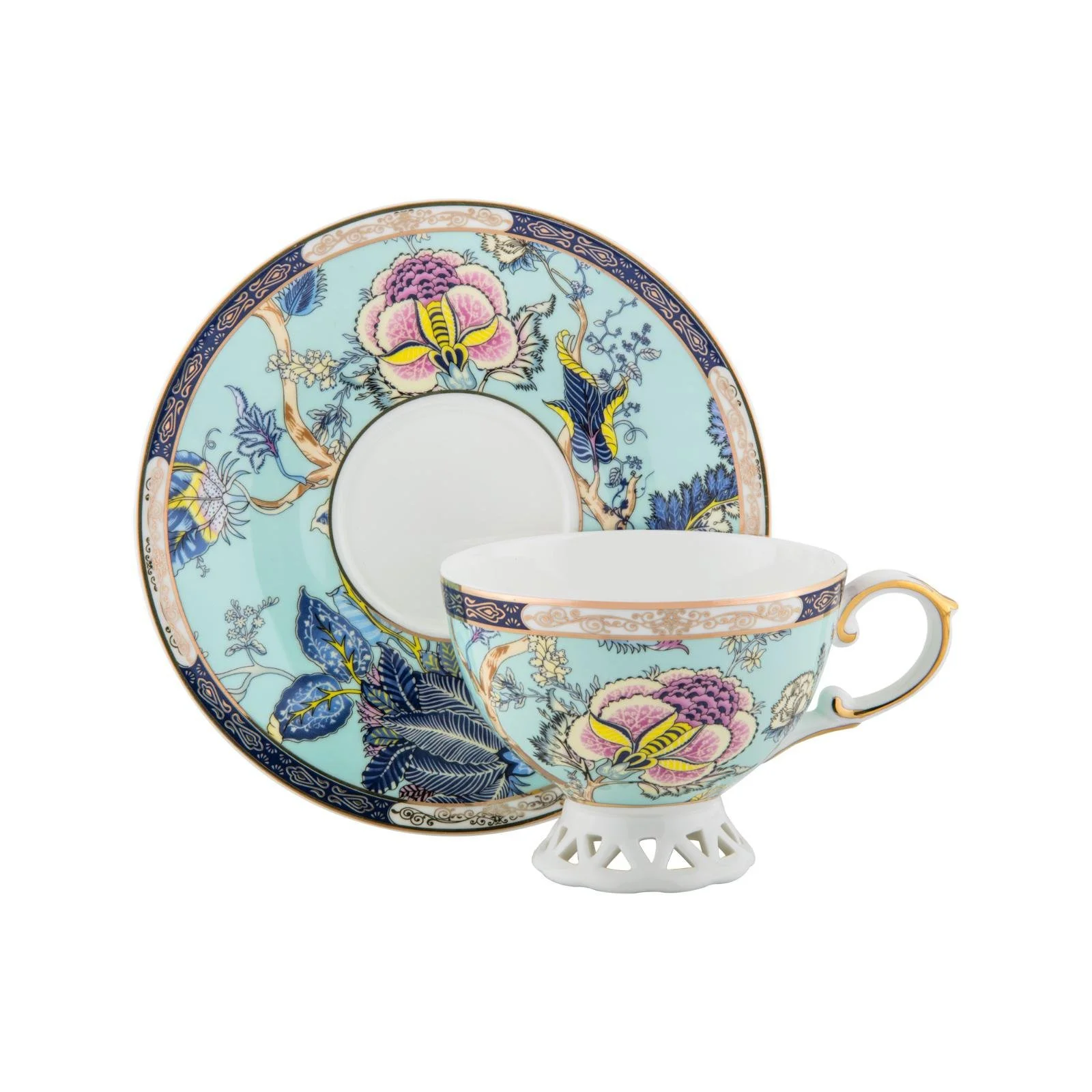
Discover the elegance of the Oriental Blossom Tea Set in soft, serene blue. Crafted from fine bone china, this set of four cups and saucers features delicate floral motifs and gold detailing. A beautiful addition to your tea collection that brings refined style to any occasion.
Tea Set Includes 4 Tea Cups and 4 Saucers
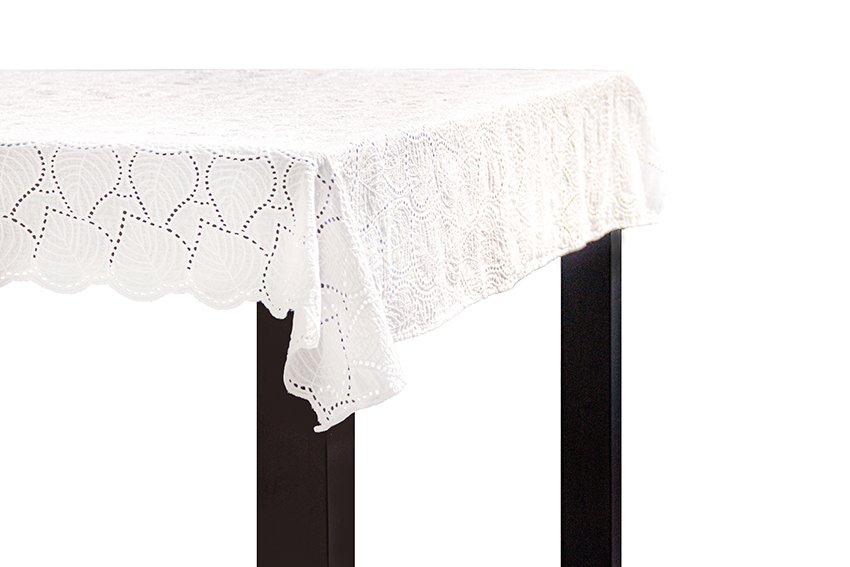
Enhance your dining experience with the subtle sophistication of the Embroidery Leaf Tablecloth in White. Beautifully designed with delicate embroidered leaves, this tablecloth exudes a refined charm that effortlessly elevates any table setting. Whether you're hosting a spring gathering, a garden-themed event, or an intimate dinner party, its understated elegance makes it the perfect choice for both special occasions and everyday use. With its natural-inspired motif, this tablecloth strikes the perfect balance between timeless style and contemporary design, offering a versatile addition to your dining décor.
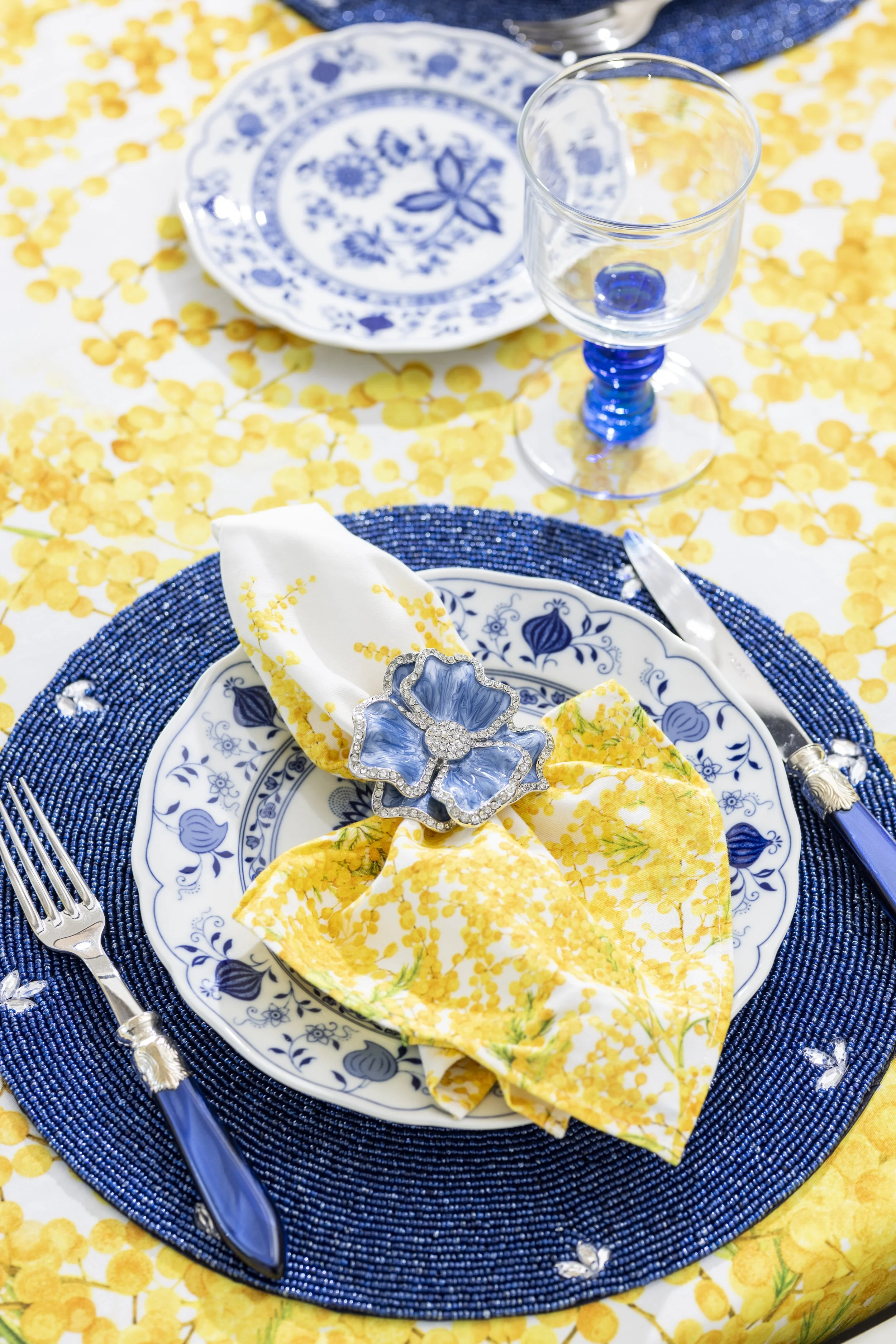
There is no easier way to liven up your table than with this handmade beaded placemat. Beautifully crafted with royal blue beads, it adds a classic charm while bringing the shine and sparkle to the table setting. The timeless round design is guaranteed to dress your table elegantly and can be mixed and matched across various styles.

Indulge in a refined tea experience with the Mono Filio Tea Cups and Saucers, a perfect complement to the iconic Mono Filio Teapot. This sophisticated set includes two beautifully crafted borosilicate glass tea cups and two polished stainless steel saucers, seamlessly blending modern aesthetics with timeless elegance.

Enhance your dining experience with a waterproof placemat featuring a crisp white design complemented by a stylish gold embroidery border. The sophisticated gold embroidery along the border adds a touch of luxury and glamour to your table setting. Not only is this placemat stylish, but it is also functional, providing protection against spills and stains with its waterproof feature.
Fabric: Waterproof / Linen Finish: Embroidery
Care instructions:
Do not machine wash. To clean the embroidery and fabric, use a gentle brush with colorless detergent. Gently scrub over the surface and rinse thoroughly with running water. Avoid twisting the item to prevent folding. If the item is wrinkled, iron it on a low temperature.
Made in Brazil
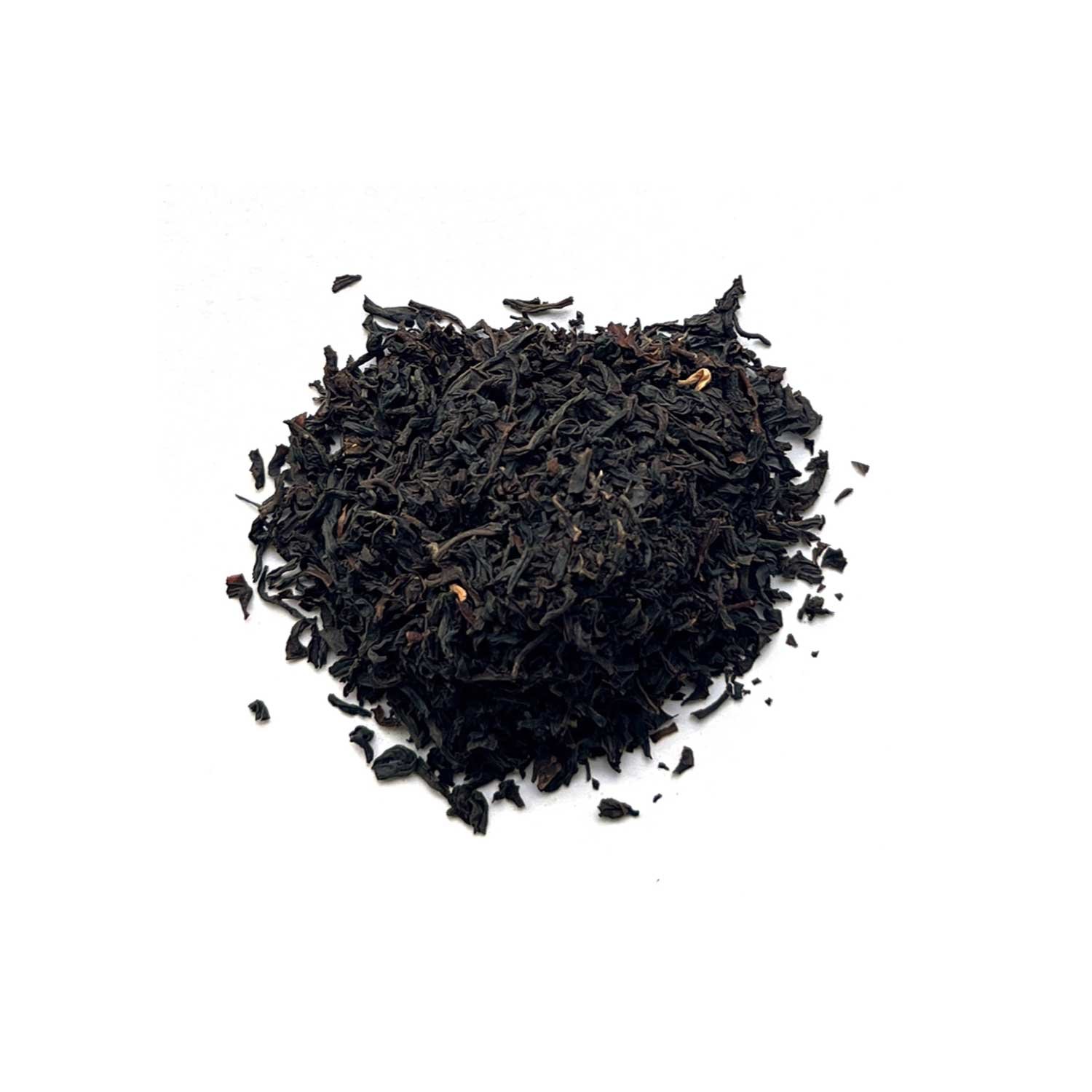
*black tea mixture* (China), black tea Assam* (India). *certified organic
Indulge in the epitome of morning teas with our premium Single Origin English Breakfast Tea. Sourced exclusively from the verdant, rolling hills of a celebrated estate, this loose leaf blend is crafted to transform your tea-drinking experience into a luxurious ritual.
Flavouring None
Taste Strong
Recommended brewing time (min.) 3-5
Recommended dosage (gram/litre) 12-15
Recommended water temperature (°C) 95
Country of origin Germany
Minimum shelf life (months) 36
Storage Cold, dry, light-sealed & free from foreign odours
Quality Bio - certified organic