Where to Go for Tea Tasting in Hong Kong
You have done dim sum. You have had the Chinese tea, watched the trolleys, learned to tap two fingers on the table when someone pours. You think you know how tea works in this city.
If the tea was the part you enjoyed most, there is more of an adventure to follow. The tea poured at a dim sum table is a commercial blend, built for price and volume, the flavour smoothed out so it offends no one. The high-quality tea poured at a tasting session, while it is still called tea, is at another level: single-origin, hand-picked, from a named harvest, the kind of leaf collectors track by year and processing batch.
There are three kinds of tea tasting venues in Hong Kong, and which one is right for you depends on what you want from the cup.
First, though, what tea tasting actually involves
Tea tasting is different from a dim sum table in every sense - not just taste.
Taste. The leaf at a tasting is a rare strain, not the sort you would normally come across: hand-picked, high-grade, grown high on the mountain. It gives a cleaner, fresher, more distinctive taste to begin with, and with the right brewing the flavour evolves across four to eight infusions from the same leaves, so each cup carries a subtle shift from the one before. The first cup is different from the fourth. That progression does not exist in a commercial blend. It is the reason you are there.
Aroma. At a dim sum table, the tea smells earthy and functional. At a tasting, the aroma moves through three distinct phases: the dry leaf before it is brewed, the steam rising from the cup on the first pour, and the fragrance that clings to an empty cup afterward. That last signal is one of the clearest quality indicators in Chinese tea evaluation, and there is even a dedicated vessel for it, the wen xiang bei (闻香杯), a narrow cup shaped to hold the aroma after the tea is gone. A quality aged tea leaves a scent that lasts minutes after the cup is empty. A commercial blend leaves almost nothing.
Sound. The difference is immediate. Trolleys, clatter, orders called across a packed room. Versus the sound of water poured slowly, a lid placed back on a gaiwan, the silence between infusions. That quiet is not incidental. It is what makes sustained attention on the cup possible.
Touch. The white institutional teapot at a dim sum table is functional. At a tasting, you hold Yixing clay, thin-walled porcelain, or a glass vessel you can feel cooling between your hands as the water temperature drops between pours. The teaware is part of how you experience the tea, not backdrop.
Sight. In a white teapot, you see nothing. At a tasting, you watch the colour shift: pale gold on the first infusion, deepening to amber by the second, copper by the fourth. This is not aesthetic. It tells you how the leaf is opening. A flat colour across infusions means a flat tea; visible change means the leaf still has something to give. A tea that holds its character into the third steep will go six or more, which makes the third infusion the test.
At the venues listed below, you can open up all five senses to tea in a different way. What changes from one to the next is the format, not what you are tasting for. There are three.
1) The specialist tea house session
No booking. No curriculum. No food agenda. You walk in, sit down, and someone who knows the leaf pours and guides. The focus is entirely on what is in the cup. Nothing is expected of you except attention. It is the most accessible way into serious tea in Hong Kong, and also the one most people who have lived here for years never realise exists.
LockCha G/F, The K.S. Lo Gallery, Hong Kong Park, 10 Cotton Tree Drive, Admiralty
LockCha is the benchmark. Ip Wing-chi founded it in 1991; the Hong Kong Park location opened in 2003 and has run the longest tea programme in the city. The collection is all single-origin estate tea, sourced directly from small farms, and staff will guide you without being asked. American Express Essentials has named it one of the world's best vegetarian restaurants, which slightly misses the point. Come for the tea and plan to stay longer than you meant to.
Fukien Tea Company 6 Mercer Street, Sheung Wan
Fukien Tea Company is a different animal. Patrick Yeung (Yeung sifu) is in his 70s, and the shop has been in his family, originally from Fukien province, for over 60 years. He specialises in oolong roasted the old way. The high-fire Tie Guan Yin takes 60 hours in an electric oven, producing a depth the same leaf roasted for six hours cannot touch, and he keeps both side by side. Sit at the back tasting table, the one with mismatched wooden chairs and faded photographs on the wall, and he will pour you both without being asked. There is more tea knowledge in that back room than in most workshops that charge for it.
2) Tea and food pairing
Everyone applies wine logic to food without thinking about it. Almost nobody applies it to Chinese tea, beside a few specialty venues like the two listed below, which makes it a one-of-a-kind way to taste tea.
MingCha 40 Lee Chung Street, Chai Wan (five minutes from Chai Wan MTR, Exit C)
MingChais the anchor for this. Founder Vivian Mak, recognised by Food & Wine Magazine as running one of the world's best tea shops, leads the sessions herself: four handcrafted teas explored across all five senses and paired with snacks, over ninety minutes, capped at twenty people. The tea and dim sum pairing format starts from HK$300 per person. Sessions run in English, and you need to book ahead. Chai Wan is not Central, but it is worth the trip.
LockCha G/F, The K.S. Lo Gallery, Hong Kong Park, 10 Cotton Tree Drive, Admiralty
LockCha's kitchen does a looser version of the same idea. The vegetarian dim sum menu is built to complement the tea rather than compete with it. There is no fixed pairing fee; you pay for the tea and the food you order, with a per-person tea charge from around HK$38. It is less a workshop than an extended session where the pairing logic makes itself felt without anyone explaining it, which makes it a gentle first encounter with the idea before committing to the full MingCha format.
3) The tasting workshop
This one is for the reader who wants to leave with skills on top of a chill tea tasting session. The difference from a specialist session is structure. There, someone pours and you observe. In a workshop you learn to evaluate: how to read colour across infusions, how to sort aromas, how temperature and steep time change what is in the cup, and why the same tea brewed badly and brewed well is not the same drink.
That is harder to teach yourself than it sounds. You can read about gongfu brewing for an hour and still scorch a green oolong on your first try at home, because nobody showed you what "too hot" looks or smells like in the cup. A guided session closes that feedback loop. You taste right and wrong side by side, in real time, with someone there to name what you are noticing, and that is the part that carries over to your own kitchen.
Plantation by teakha 18 Po Tuck Street, Sai Wan (near HKU MTR, Exit B2)
Plantation by teakha is the clearest entry point. HK$450 per person, seventy-five minutes, run by founder Nana Chan's tea masters. You taste one tea from each of the five main categories, white, green, oolong, black, and fermented, every one single-origin, whole-leaf, sourced directly from small family farms across Asia. Capped at eight people, with four needed to run, and you book ahead. The tone is conversational rather than academic and the content flexes to the group, so you leave knowing what you tasted and why it mattered. That is the right foundation before trying any of it at home.
MingCha 40 Lee Chung Street, Chai Wan (five minutes from Chai Wan MTR, Exit C)
MingCha's workshop is the more advanced version. Vivian Mak leads it herself, all five senses engaged, food pairing woven through. If you want the most complete and structured experience in Hong Kong, and the one closest to how professional tea evaluation actually works, this is it.
Which one is right for you?
| I want to… | Go to | Book ahead? |
|---|---|---|
| Sit with knowledgeable staff and a great tea selection | LockCha | No |
| Sit with a working tea master and taste something serious | Fukien Tea Company | No |
| Understand how tea pairs with food | MingCha | Yes |
| Leave with skills I can use at home (beginner) | Plantation by teakha | Yes |
| Leave with skills I can use at home (advanced) | MingCha | Yes |
Bring it home
After a good session, most people want to try it at home, and the instinct is right. Two things make that work, and they go in order.
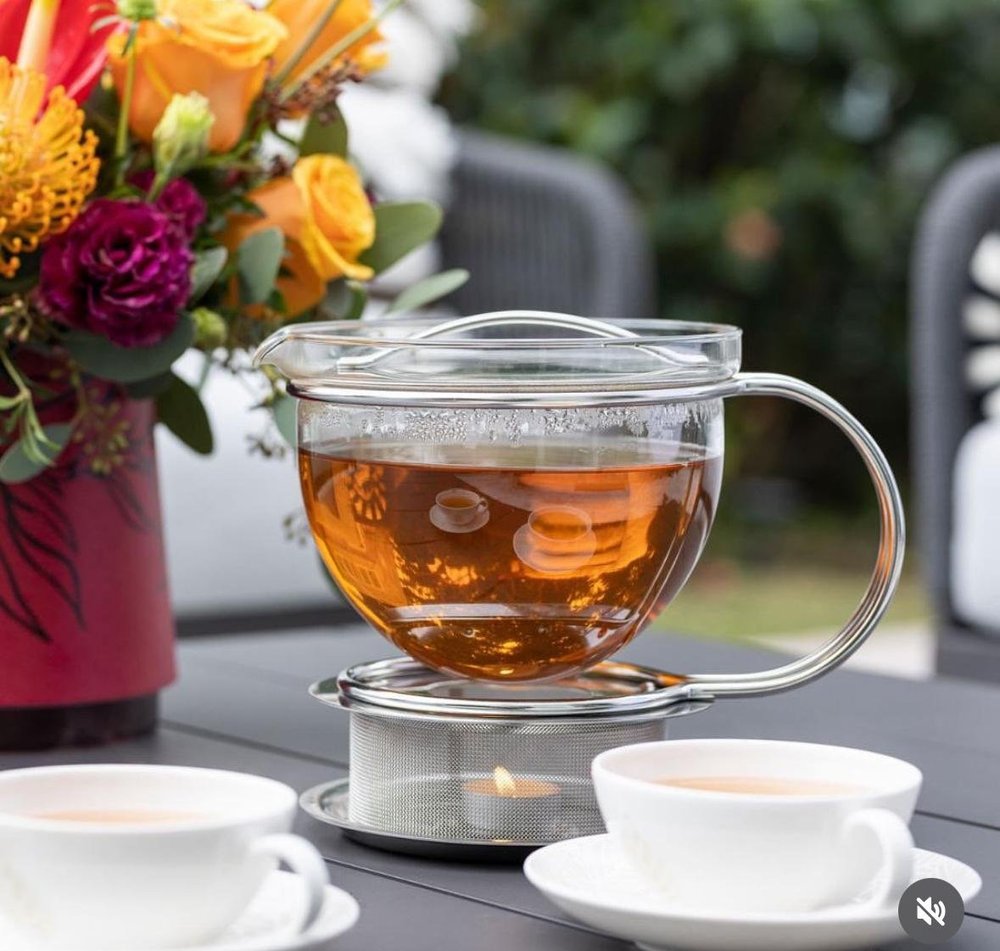
First, the tea. One good estate tea, the one you liked best in your session or the one the tea master pointed you to on the way out, is the whole foundation. Then the vessel. A glass teapot lets you watch the colour shift you now know to read, and a warmer underneath holds the temperature steady between pours so you never scorch the leaf, which matters more at home where nobody is there to catch the mistake.
You can pick up both at Time For Tea in Central, or online.
Single-Origin Estate Tea
From HK$120
Hand-picked, single-harvest leaf worth steeping six times over. Start here.
Glass Teapot & Warmer Set
From HK$380
Watch the infusions change colour and keep the temperature steady, pour after pour.